
Reksoft
Reksoft is a ERP internal platform for logistics control and supply chain monitoring in the oil & gas industry. It is used by operators, logistics coordinators, and executives to track shipments, documents, and operational events across multiple systems.
The interface includes data-heavy dashboards, document tracking flows, and complex reporting, where mistakes are costly and delays directly affect operations. Improving clarity, traceability, and task efficiency was critical for daily use.
Reksoft is a ERP internal platform for logistics control and supply chain monitoring in the oil & gas industry. It is used by operators, logistics coordinators, and executives to track shipments, documents, and operational events across multiple systems.
The interface includes data-heavy dashboards, document tracking flows, and complex reporting, where mistakes are costly and delays directly affect operations. Improving clarity, traceability, and task efficiency was critical for daily use.
Core Product Screens
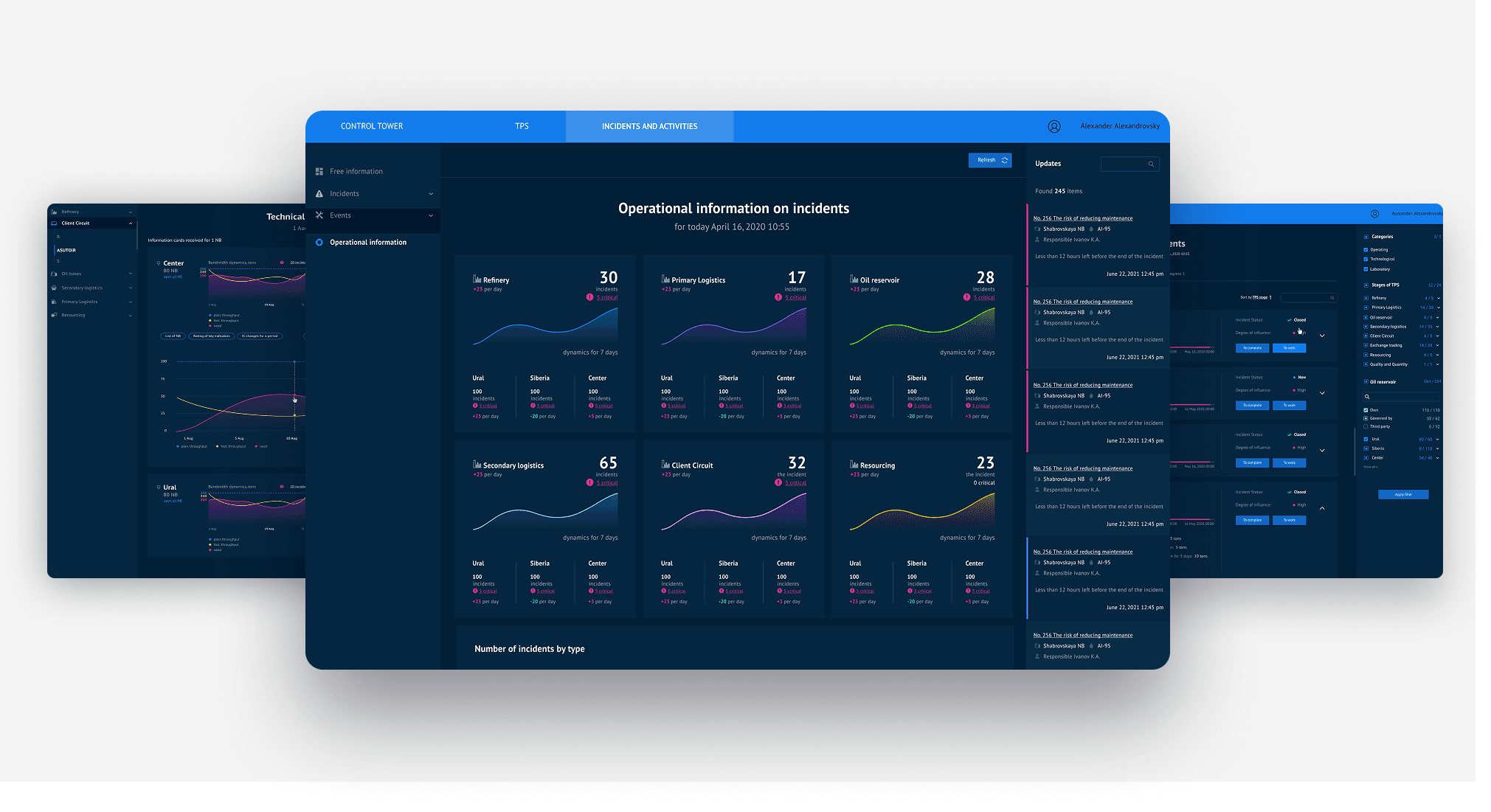
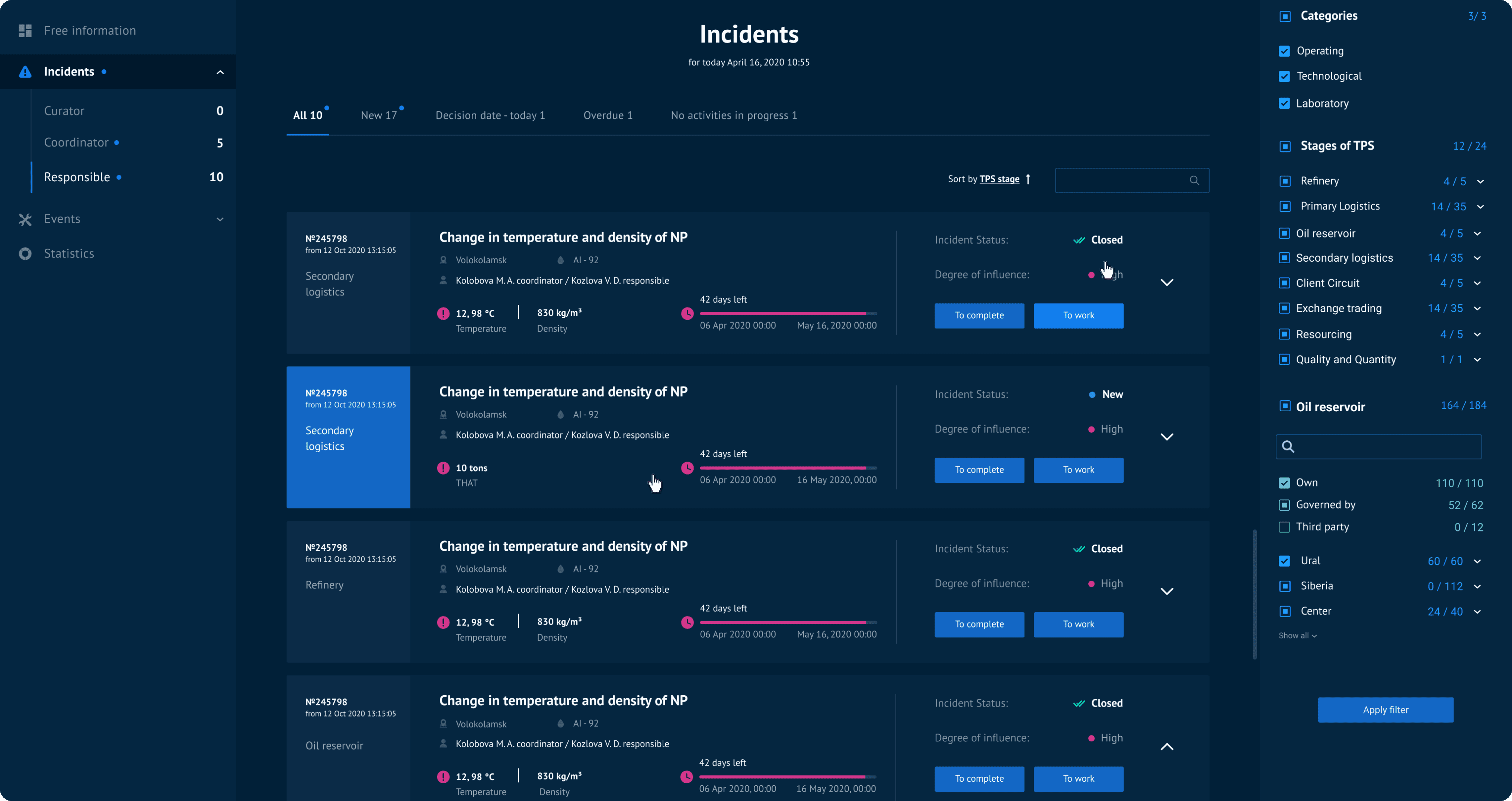

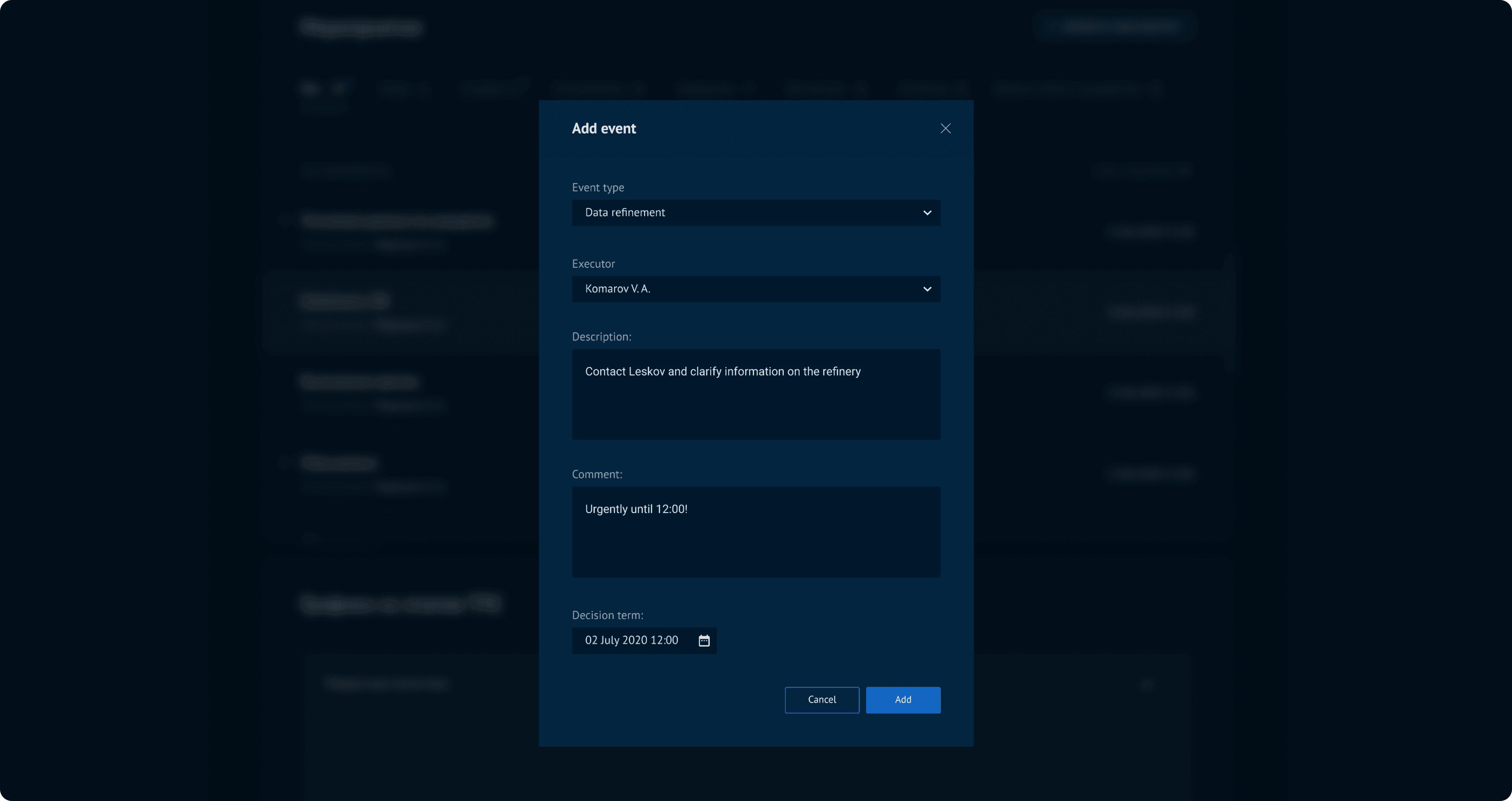
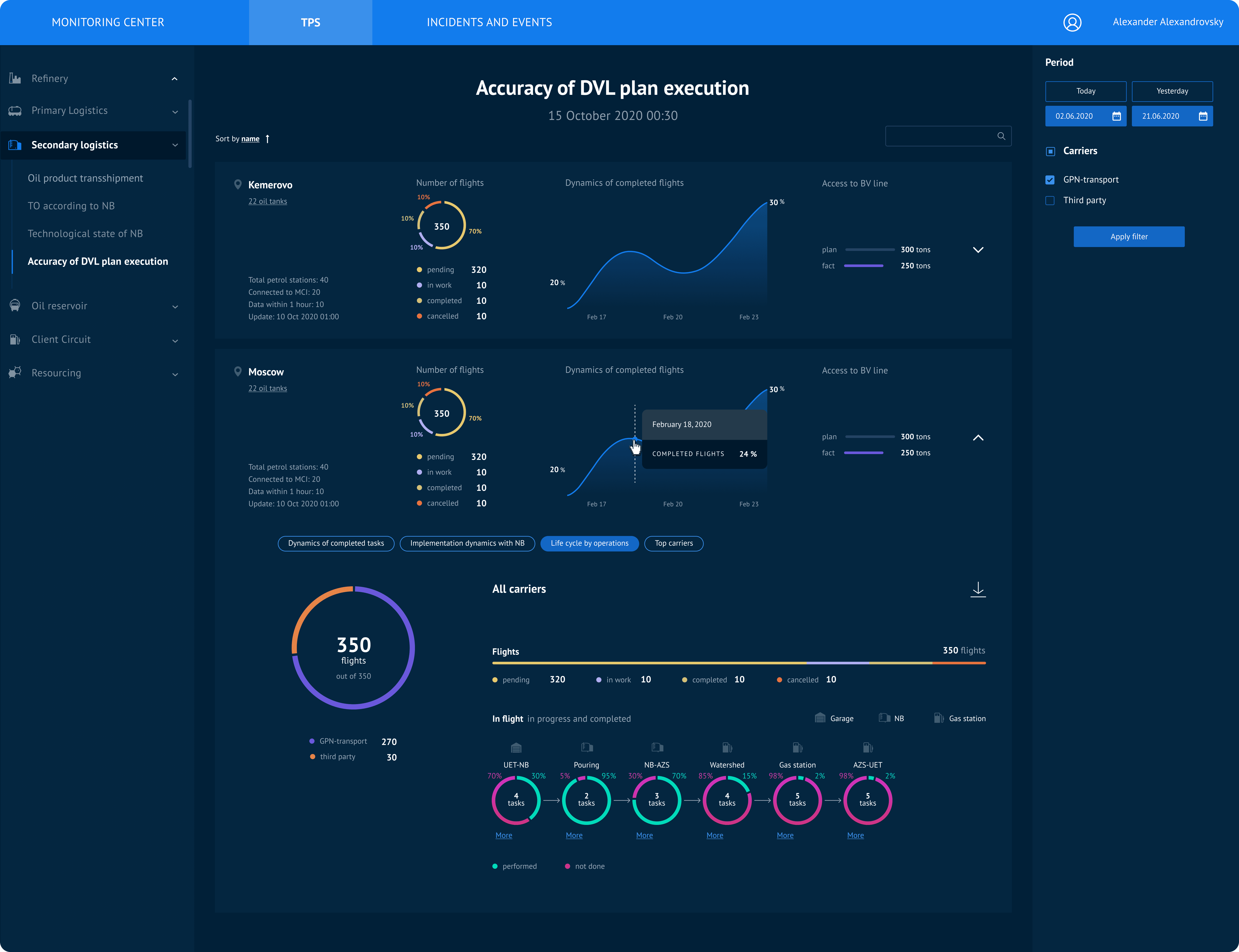
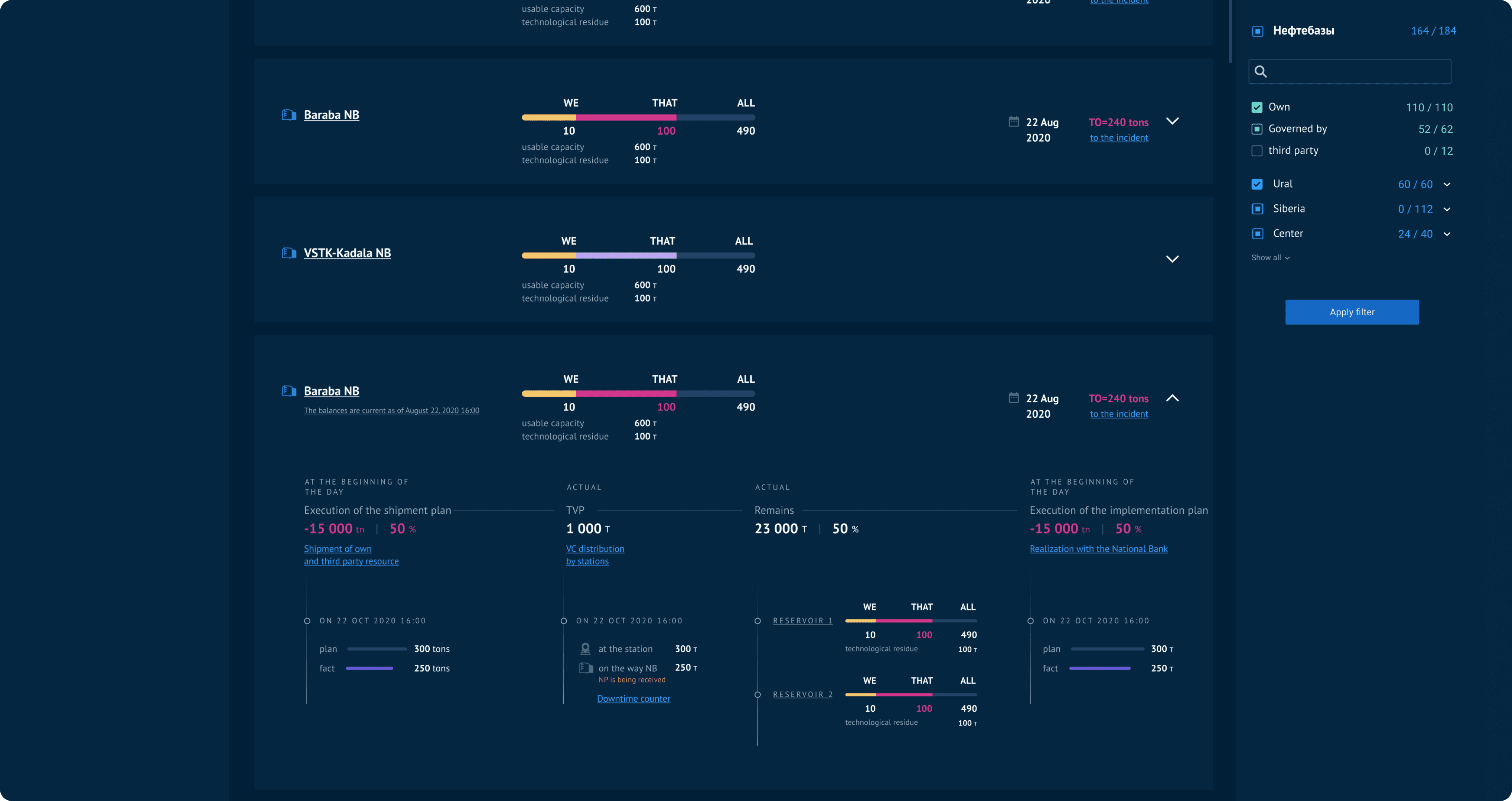
Selected screens of the core platform, including monitoring dashboards, document tracking flows, and operational reporting tools used by logistics operators and managers on a daily basis. The system was designed from scratch to centralize fragmented processes, improve visibility across supply chain operations, and reduce errors in high-stakes environments.
Selected screens of the core platform, including monitoring dashboards, document tracking flows, and operational reporting tools used by logistics operators and managers on a daily basis. The system was designed from scratch to centralize fragmented processes, improve visibility across supply chain operations, and reduce errors in high-stakes environments.
Domain
Oil & Gas Logistics
Oil & Gas
Logistics
Type
B2B / Internal Operations Tool
B2B
Internal Operations Tool
Role
Senior Product Designer
Scope
Discovery-to-Delivery, UX strategy, workflow architecture
Discovery-to-Delivery, UX strategy,
workflow architecture
Team
Team
PM, engineers, analysts, QA
Case Study.
Digitalizing Logistic Document Workflows.
0→1 / greenfield / digital transformation
The project started as a greenfield initiative with no existing product — only fragmented manual workflows and disconnected systems. The challenge was to design a platform from scratch that would digitalize document flows, bring structure to operations, and enable end-to-end visibility across complex logistics processes.
Problem Statement
Problem Statement
Problem Statement
Logistics operations relied on fragmented systems and manual document workflows, resulting in limited visibility, frequent errors, and inefficient coordination.
Users were forced to switch between tools, reconcile data manually, and manage complex document lifecycles without a unified structure, increasing operational risk and slowing down decision-making.
The absence of a centralized platform made it difficult to monitor processes end-to-end and ensure reliable, timely execution.
Logistics operations relied on fragmented systems and manual document workflows, resulting in limited visibility, frequent errors, and inefficient coordination.
Users were forced to switch between tools, reconcile data manually, and manage complex document lifecycles without a unified structure, increasing operational risk and slowing down decision-making.
The absence of a centralized platform made it difficult to monitor processes end-to-end and ensure reliable, timely execution.
Case Study.
Digitalizing Logistic Document Workflows. 0→1 / greenfield / digital transformation
The project started as a greenfield initiative with no existing product — only fragmented manual workflows and disconnected systems. The challenge was to design a platform from scratch that would digitalize document flows, bring structure to operations, and enable end-to-end visibility across complex logistics processes.
Research & Discovery
Research & Discovery
Research & Discovery
Because no product existed, the project started with deep discovery:
In-depth interviews with logistics operators and coordinators
Shadowing & field observations in logistics offices and production sites
Workflow mapping of real document and shipment lifecycles
Identification of critical errors, delays, and manual workarounds
This research formed the foundation for system architecture and prioritization.
Because no product existed, the project started with deep discovery:
In-depth interviews with logistics operators and coordinators
Shadowing & field observations in logistics offices and production sites
Workflow mapping of real document and shipment lifecycles
Identification of critical errors, delays, and manual workarounds
This research formed the foundation for system architecture and prioritization.
Solution
Solution
Solution
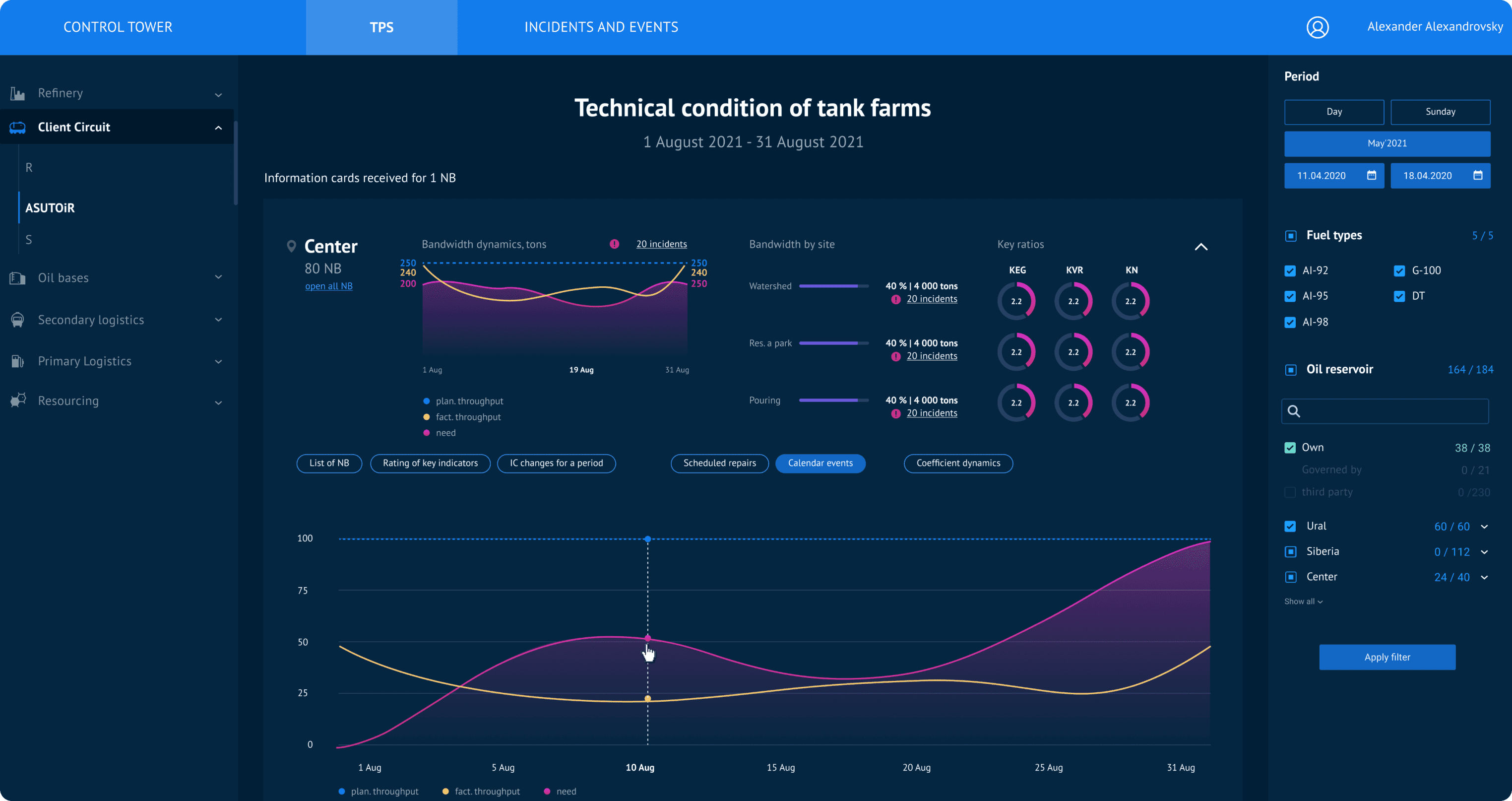
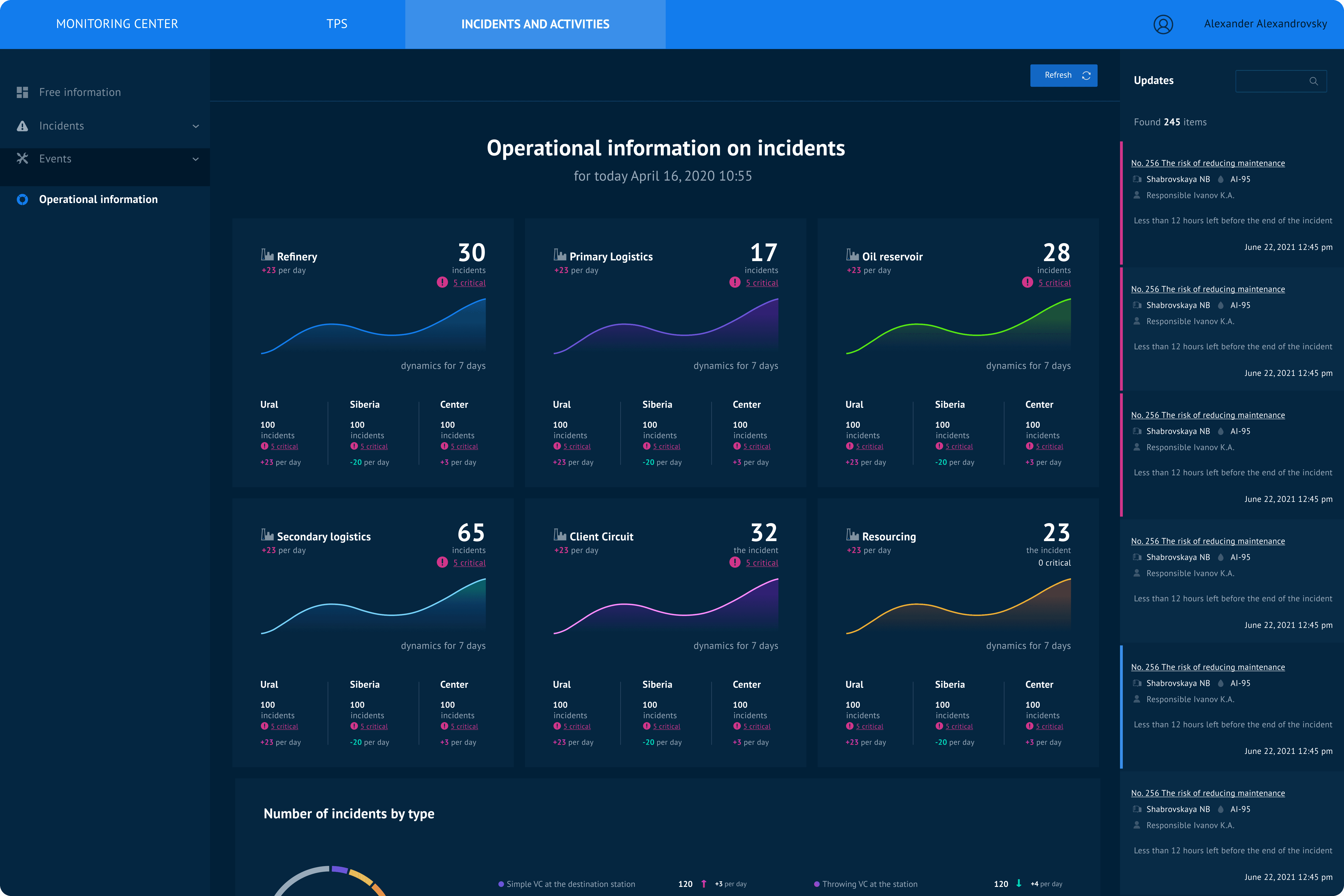
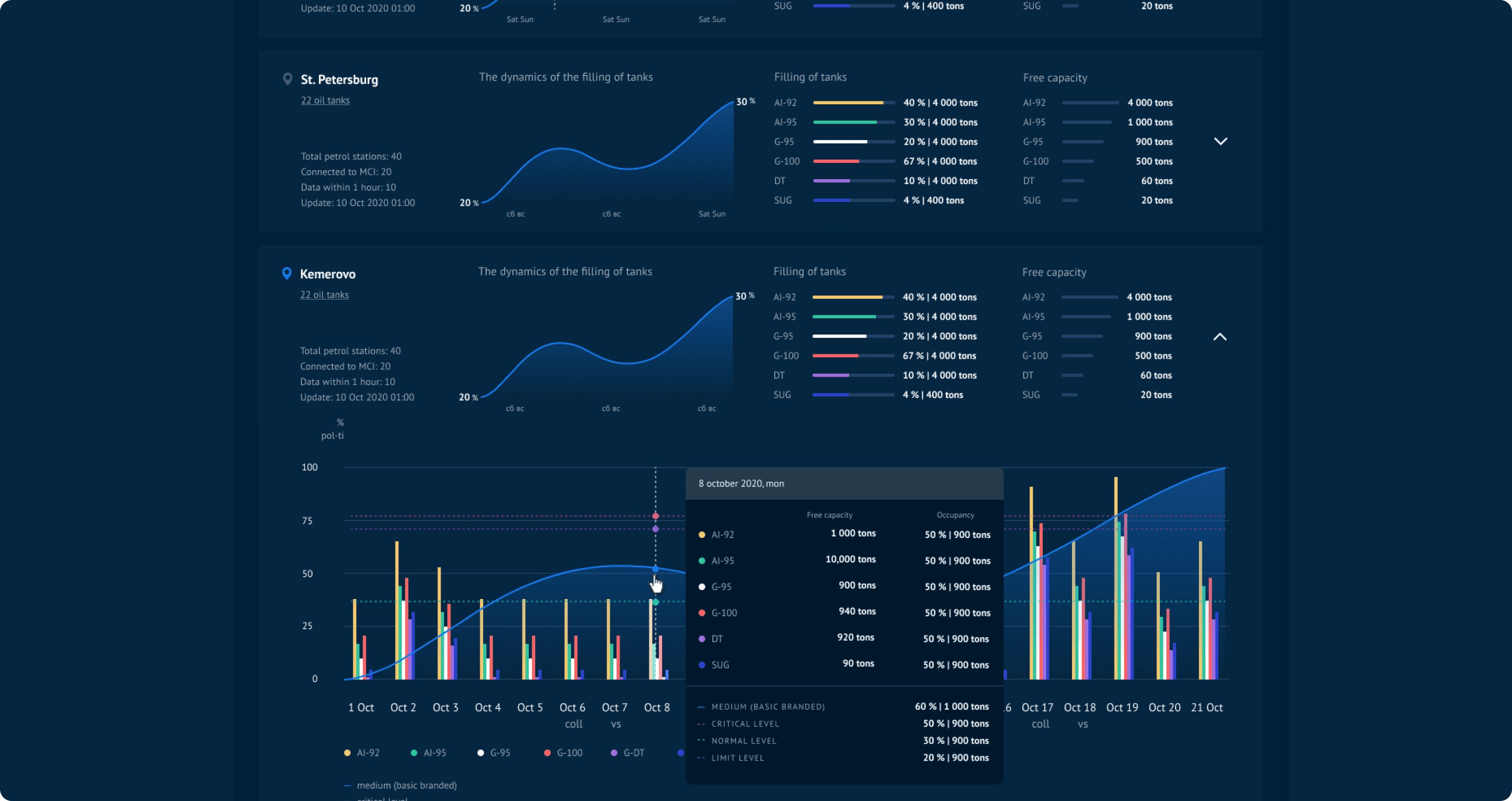
I designed a centralized internal control platform focused on clarity, traceability, and operational speed:
Digital document flow
Structured tracking of documents across their lifecycle (creation → approval → execution).Control Tower dashboards
Real-time visibility into logistics status, exceptions, and risks.
Role-based interfaces
Different views for operators, managers, and executives.Clear information architecture
Reduced cognitive load in data-heavy tables and reports.Scalable UX patterns
Designed to support future expansion and new operational scenarios.
I designed a centralized internal control platform focused on clarity, traceability, and operational speed:
Digital document flow
Structured tracking of documents across their lifecycle (creation → approval → execution).Control Tower dashboards
Real-time visibility into logistics status, exceptions, and risks.
Role-based interfaces
Different views for operators, managers, and executives.Clear information architecture
Reduced cognitive load in data-heavy tables and reports.Scalable UX patterns
Designed to support future expansion and new operational scenarios.
I designed a centralized internal control platform focused on clarity, traceability, and operational speed:
Digital document flow
Structured tracking of documents across their lifecycle (creation → approval → execution).Control Tower dashboards
Real-time visibility into logistics status, exceptions, and risks.
Role-based interfaces
Different views for operators, managers, and executives.Clear information architecture
Reduced cognitive load in data-heavy tables and reports.Scalable UX patterns
Designed to support future expansion and new operational scenarios.
-45%
Report Preparation Time
-37%
Operational Errors
-52%
Time to Locate Critical Documents
800+
800+ Active Internal Users
-54%
Document Retrieval Time
-26%
Time to Detect Operational Issues
Outcomes & Impact
Outcomes & Impact
The platform enabled the company to:
Reduce time-to-complete operational tasks
Significantly shorten report preparation time
Decrease document-related errors
Improve transparency and accountability across teams
Establish a single source of truth for logistics operations
Beyond the product itself, I also helped introduce a structured design process in the team — from discovery to delivery — which was later reused in other internal projects.
The platform enabled the company to:
Reduce time-to-complete operational tasks
Significantly shorten report preparation time
Decrease document-related errors
Improve transparency and accountability across teams
Establish a single source of truth for logistics operations
Beyond the product itself, I also helped introduce a structured design process in the team — from discovery to delivery — which was later reused in other internal projects.
Metrics & Validation
Metrics & Validation
Metrics & Validation
Note: Metrics are based on stakeholder interviews, field observations, and process reconstruction before digitization.
What we measured
Because the platform did not exist prior to this project, baseline metrics were reconstructed through qualitative and observational methods. The focus was on process efficiency, error reduction, and operational visibility rather than classic SaaS growth metrics.
Key outcomes
↓ Task Completion Time
Manual reporting and coordination workflows were reduced from several hours (or up to a full working day in edge cases) to a single structured digital flow.
↓ Reporting Time
Operational and management reports previously required manual data aggregation across teams, documents, and communication channels.
After digitization, reports became faster to generate and easier to validate.
↓ Operational Errors
Reduced document mismatches, missing records, and human errors caused by manual data transfer and fragmented documentation.
↑ Process Transparency
Introduced a shared, real-time view of logistics and operational data for operators, managers, and executives.
↓ Dependency on Individuals
Critical operational knowledge was moved from people and informal communication into a systematized digital process, reducing risk and operational bottlenecks.
How metrics were validated
Stakeholder interviews with logistics operators, managers, and executives
Field observations and shadowing sessions in offices and on production sites
Process mapping and before/after workflow comparison
Post-launch observation of task execution and reporting flows
Note: Metrics are based on stakeholder interviews, field observations, and process reconstruction before digitization.
What we measured
Because the platform did not exist prior to this project, baseline metrics were reconstructed through qualitative and observational methods. The focus was on process efficiency, error reduction, and operational visibility rather than classic SaaS growth metrics.
Key outcomes
↓ Task Completion Time
Manual reporting and coordination workflows were reduced from several hours (or up to a full working day in edge cases) to a single structured digital flow.
↓ Reporting Time
Operational and management reports previously required manual data aggregation across teams, documents, and communication channels.
After digitization, reports became faster to generate and easier to validate.
↓ Operational Errors
Reduced document mismatches, missing records, and human errors caused by manual data transfer and fragmented documentation.
↑ Process Transparency
Introduced a shared, real-time view of logistics and operational data for operators, managers, and executives.
↓ Dependency on Individuals
Critical operational knowledge was moved from people and informal communication into a systematized digital process, reducing risk and operational bottlenecks.
How metrics were validated
Stakeholder interviews with logistics operators, managers, and executives
Field observations and shadowing sessions in offices and on production sites
Process mapping and before/after workflow comparison
Post-launch observation of task execution and reporting flows
Note: Metrics are based on stakeholder interviews, field observations, and process reconstruction before digitization.
What we measured
Because the platform did not exist prior to this project, baseline metrics were reconstructed through qualitative and observational methods. The focus was on process efficiency, error reduction, and operational visibility rather than classic SaaS growth metrics.
Key outcomes
↓ Task Completion Time
Manual reporting and coordination workflows were reduced from several hours (or up to a full working day in edge cases) to a single structured digital flow.
↓ Reporting Time
Operational and management reports previously required manual data aggregation across teams, documents, and communication channels.
After digitization, reports became faster to generate and easier to validate.
↓ Operational Errors
Reduced document mismatches, missing records, and human errors caused by manual data transfer and fragmented documentation.
↑ Process Transparency
Introduced a shared, real-time view of logistics and operational data for operators, managers, and executives.
↓ Dependency on Individuals
Critical operational knowledge was moved from people and informal communication into a systematized digital process, reducing risk and operational bottlenecks.
How metrics were validated
Stakeholder interviews with logistics operators, managers, and executives
Field observations and shadowing sessions in offices and on production sites
Process mapping and before/after workflow comparison
Post-launch observation of task execution and reporting flows
Key Learnings
Key Learnings
Key Learnings
Digitization starts with understanding real work, not documents.
The biggest gap was not in missing software, but in the difference between how processes were described and how they actually worked in the field.
Field research is critical for operational products.
Shadowing and on-site observation were essential to design a system that reflects real workflows and not idealized processes.
Different roles see the same process differently.
Operators, managers, and executives had completely different mental models, which required a unified structure and language.
Process clarity matters more than UI complexity.
In high-risk environments, clarity, predictability, and error prevention are more important than feature richness or visual sophistication.
Design systems are essential in large operational products.
Reusable patterns and clear principles helped scale the product and maintain consistency.
Design can reduce operational risk.
Structuring workflows and improving data visibility directly reduced human errors and reliance on individual knowledge.
Digitization starts with understanding real work, not documents.
The biggest gap was not in missing software, but in the difference between how processes were described and how they actually worked in the field.
Field research is critical for operational products.
Shadowing and on-site observation were essential to design a system that reflects real workflows and not idealized processes.
Different roles see the same process differently.
Operators, managers, and executives had completely different mental models, which required a unified structure and language.
Process clarity matters more than UI complexity.
In high-risk environments, clarity, predictability, and error prevention are more important than feature richness or visual sophistication.
Design systems are essential in large operational products.
Reusable patterns and clear principles helped scale the product and maintain consistency.
Design can reduce operational risk.
Structuring workflows and improving data visibility directly reduced human errors and reliance on individual knowledge.
Digitization starts with understanding real work, not documents.
The biggest gap was not in missing software, but in the difference between how processes were described and how they actually worked in the field.
Field research is critical for operational products.
Shadowing and on-site observation were essential to design a system that reflects real workflows and not idealized processes.
Different roles see the same process differently.
Operators, managers, and executives had completely different mental models, which required a unified structure and language.
Process clarity matters more than UI complexity.
In high-risk environments, clarity, predictability, and error prevention are more important than feature richness or visual sophistication.
Design systems are essential in large operational products.
Reusable patterns and clear principles helped scale the product and maintain consistency.
Design can reduce operational risk.
Structuring workflows and improving data visibility directly reduced human errors and reliance on individual knowledge.
Outcomes & Impact
The platform enabled the company to:
Reduce time-to-complete operational tasks
Significantly shorten report preparation time
Decrease document-related errors
Improve transparency and accountability across teams
Establish a single source of truth for logistics operations
Beyond the product itself, I also helped introduce a structured design process in the team — from discovery to delivery — which was later reused in other internal projects.